From this month’s theme, “Tech Touch”, here are 4 recordings, artists, and experimental works that we encourage you to experience…
In Her Studio — Nina Sobell
Nina Sobell is working within a perceptual loop. As technology is an innate element in her work, she studies the way people perceive themselves. Through visual art, performance, and the measuring of human brain waves, Nina studies how technology mediates connections. Her most recent work, GammaTime, was performed at Various/Artists in July and continues to proliferate her pioneering work with EEG technology. “GammaTime is Sobell’s latest social neurofeedback performance in which four participants wear electroencephalograph (EEG) headsets and headphones while viewing a projected audio-visualization representing their collective brain activity.” (Various/Artists) The performance explored how people would respond to the witnessing of their brain activity in community with others. People perceive a machine’s perception of their neuro-function and respond, creating Nina’s signature feedback loop.
Nina has an upcoming show at
ILON ART GALLERY — 204 West 123rd Street
Sept. 24, 2026 – Nov. 5, 2026
heartinit — mosssoap
According to artist and producer mosssoap, heartinit is a late-night alt-pop track and a small machine for keeping a feeling. The cute and airy vocals create a dissociated and fluid ambience that allows both connection and disconnection to the sound.
The single comes with an online Photo Booth. Hands in front of the camera pull hearts out of the beat; four stills land on a white strip stamped heartinit by mosssoap. Nothing is stored until you decide to take the picture home. The song is the loop in your head; the photobooth is the part of memory that only exists if you were there.
Switched on Bach — Wendy Carlos
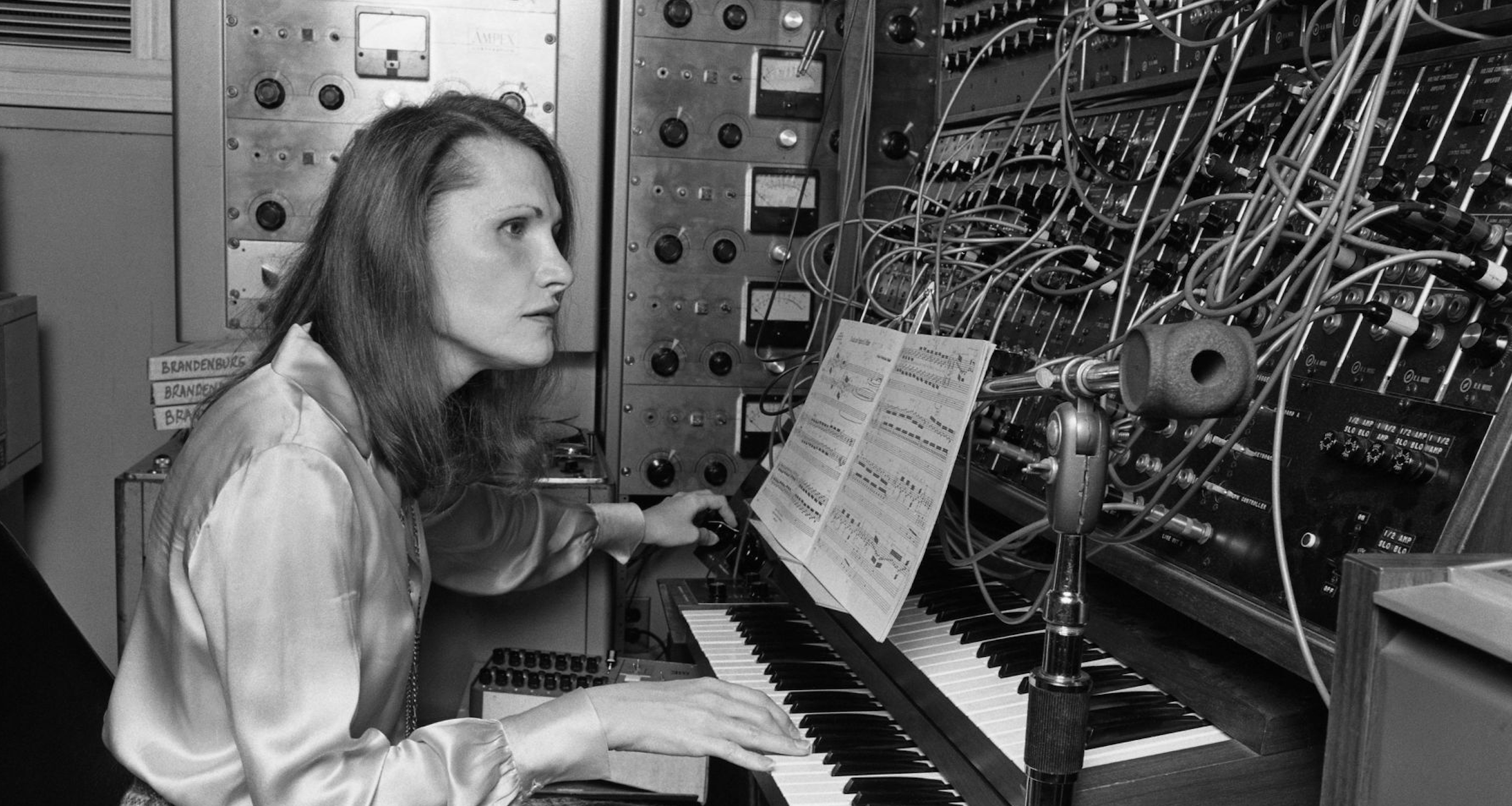
This piece of work showed the world the extent of what a Moog synthesizer can achieve. In 1968, Wendy Carlos, alongside producer Rachel Elkind and musician Benjamin Folkman, created Switched-On Bach, an album of works by Johann Sebastian Bach recreated entirely on Moog synthesizers. The work was received with controversy, being called blasphemous or disrespectful to Bach’s prestigious work, while others praised it for its skill and avant-garde display of technological expansion.
And a little queer music history: Wendy Carlos was one of the few openly transgender engineers, publicly disclosing her identity in 1979. Though such an identity would have been widely stigmatized at the time, especially in her male-dominated field of sound engineering, she participated in the process of developing the early Moog Sythesizers with Robert Moog.
NOTICE: This link may go dead at any point — Wendy Carlos’ estate has kept tight control over the distribution of her recordings and has pursued unauthorized online uploads. So while our ability to share it with you via Fieldworks may be continuously limited, do not hesitate to search for the work online or in physical form at your local record store!
MiMu gloves and its variations — Imogen Heap and more
Everyone wants to be Imogen Heap (and that’s wonderful). In 2026, we’ve seen a huge rise in live-coded music, as well as a trend toward apps that let performers apply effects and plugins to their live singing through camera-sensed hand movements. This trend echoes the work Imogen Heap developed with her Mi.Mu gloves for live performance.
This method of applying effects live is a deeply human way to engage with music. Heap has described the gloves as a way to interact with her computer software more “naturally” in this Dezeen interview.
Online, you can see examples of this revised approach from creators like @julip.mp3 on Instagram. You can also check out an adaptation of this idea for the visuals associated with the previously mentioned “heartinit” from mossoap. Check out this Photo Booth.