WRITTEN BY ELIOT LAMBERT
Somewhere between Target’s new flagship store and the Museum of Ice Cream is a sonic time machine – a listening portal that takes you back to rooms filled with cigarette smoke and anticipation.
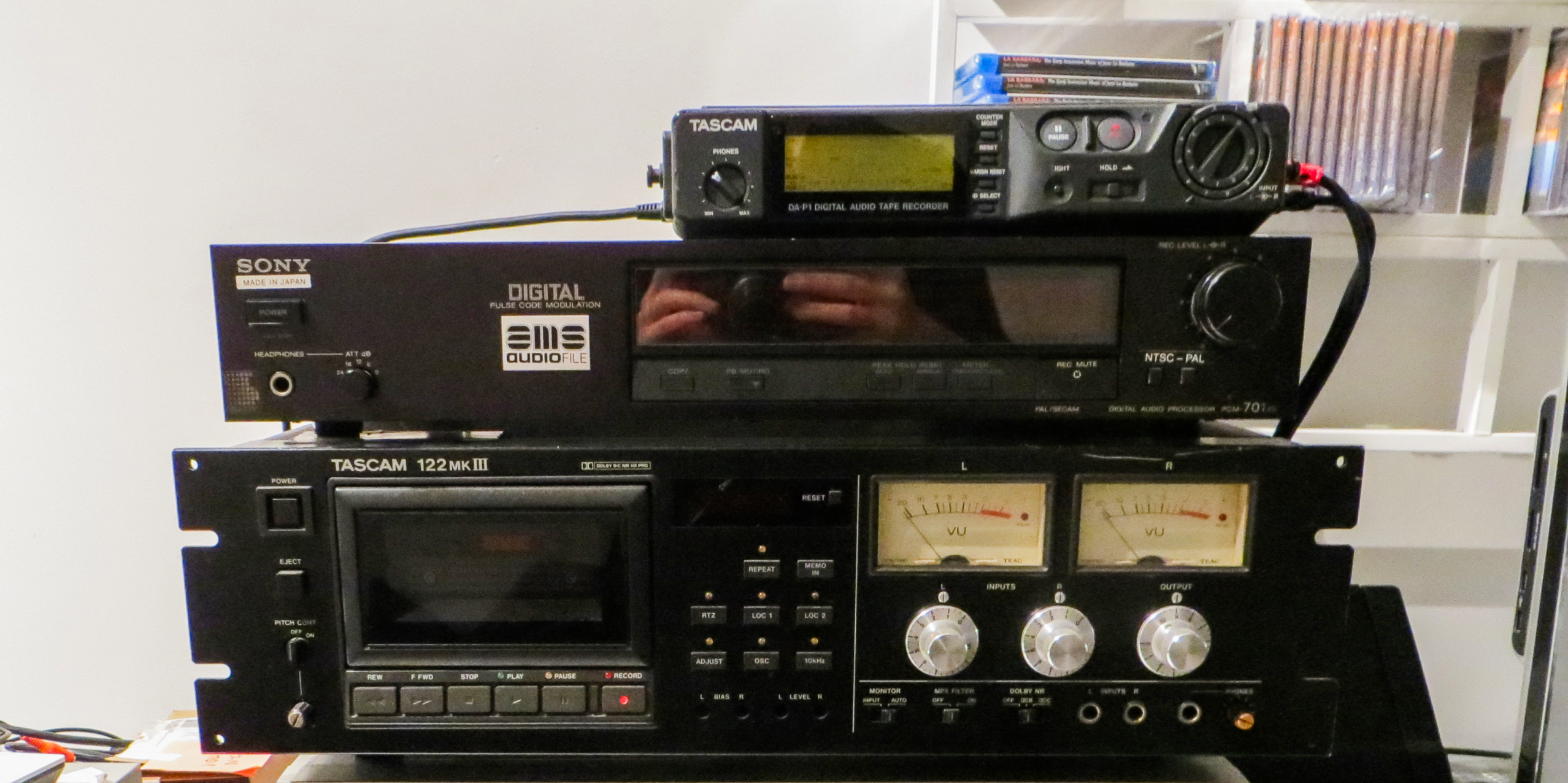
Harvestworks is home to thousands of experimental media in the form of tapes, cassettes, DATs, and VHS tapes. My task as an archive intern is to digitize them, to widen the listening portal. As someone who grew up during the iPod revolution, I have only interacted with analog recorders a handful of times. The other day, an intern joked that she didn’t know how to open the tape case – I suppose our Gen Z fingers weren’t ergonomically trained on that kind of equipment.
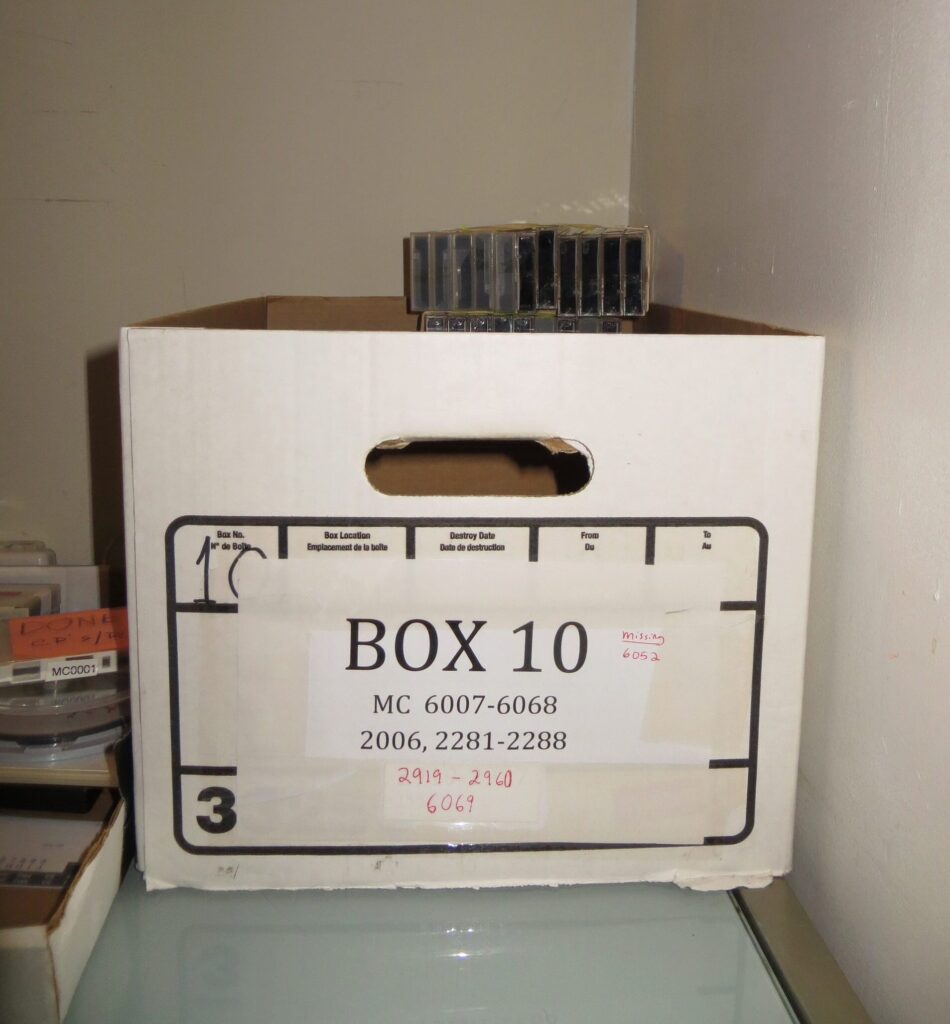
The archive team is working through Box #10, a motley crew of sex noises, German folk songs, and a gambler’s testimonial. A plethora of utterances – of humans producing weird and wonderful sounds from their mouths and hands.
I choose MC 0001 from Box #10. I place the tape in it’s recorder and press play, waiting for the first signal output – the first sign of life. Sometimes the tape makes you wait for seconds, even a minute, and then suddenly you are propelled into a specific time-space capsule. I am a Rear Window voyeur, replacing a telephoto lens with a pair of headphones.
MC 0001 is “Lovings” (1991) on tape by Richard Kostelanetz. I am transported to a lo-fi basement of people trying things out for the first time. It’s rare these days that things are tried out for the first time – which is why I am so enamored by the act. The audience are instructed to throw oranges against the wall, to grab one’s own buttocks, and to scream every time they hear the word climax.
In the audience there is a recurring and audacious laugh. I laugh co-conspiratorially with my headphones on. Laughter becomes the unexpected motif of my archive shift as the next work I digitize – MC 6056 – is stuck on a 7 second loop of two men laughing together.
The sound is so infectious that by loop number 15 I am copying their inflections in a quasi-fever dream. Is a 35 minute laughing track an artistic choice or a glitch in the tape matrix? Will the DAT ever end? I contact Ben Neill – the composer of this work – to check if the laughing is intentional.
It isn’t. The laughing has usurped the DAT sometime between 1986 and today. The DAT is put on hold for further investigation.
The next piece I digitize is MC 6012 – “NYC Lullabies” by Julia Lebentritt. I haven’t heard a lullaby in years and I’m moved by the earnest recital of “hush little baby don’t you cry” by a young boy. I imagine Lebentritt flying in and out of bedroom windows, like Peter Pan if he was an ethnomusicologist. This tape contains a polyvocality – a compilation of dulcet tones that, although traversing multiple languages and cultures, are united by their intention: to get the children of NYC to sleep. Each voice drowns out the sounds of the subway, sirens, and shouting, by singing alongside them.
I rewind the DAT, and sounds once so familiar and comforting start to run away from me backwards – a secret language shared only in Lynchian tongues.
The timecode returns to 00:00 for the next listener.
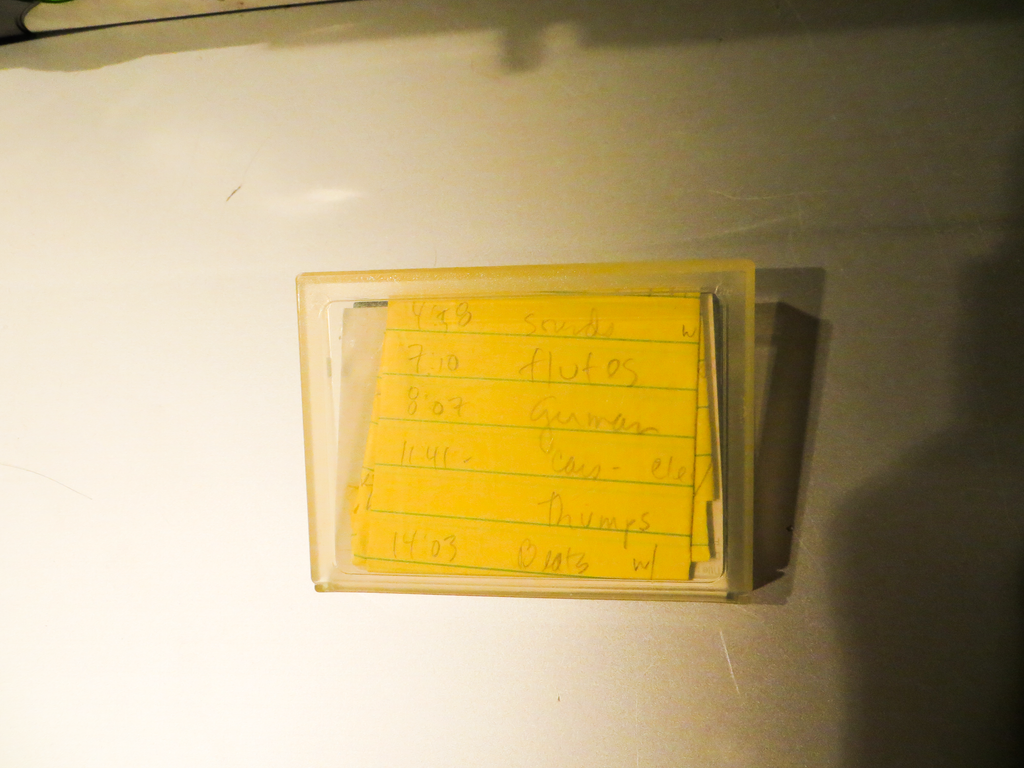
Next up is MC 6010 by Anne Wellmer. She has handwritten every section of the piece on a sheet of lined yellow paper and folded it 8 times into the DAT case. I decide that she has left this message for me as the listener. I can cross-reference every minute and second to make sure that everything is going to plan – and it does. I am intrigued by her chronology of sounds. What does the German speaker say between cars and flutes? I wish I could speak German.
Following MC 6010 is MC 6018-4 – a soundtrack to “A Man with a Movie Camera” by Tom Cora – it is labeled incomplete (only 14 minutes of the 89 minute piece is recorded on this DAT). This piece was made in 1996 as an alternate score to Dziga Vertov’s silent experimental 1929 film “Man with a Movie Camera”. I wonder what his process was for composing a silent film? Particularly Soviet era silence – worlds apart from late 90’s America. At 14 minutes I am hooked by his electronically modified cello, and must track down the remaining 75 minutes next time I go to the studio.
Digitizing physical media is worlds apart from the Spotify listening experience so ingrained in my everyday. Spotify is a slick shuffling of sound, a direct transfer from one song to another – often ephemera-less in its mixing and mastering. Every time I go into a cafe, I am reminded of the ubiquitous algorithm that Spotify churns out – one that curates and homogenizes our collective listening experience.
Sitting here with headphones on, surrendering to the unknown, is a mode of deep listening that I am grateful to be practicing. I have no idea how long these pieces will go on for – I simply press record on Ableton and wait for the portal to open.
I’ve grown fond of Box #10 – sex noises and all. I wonder what awaits me in Box #11?