2019 Artists in Residence
Awarded Artists:
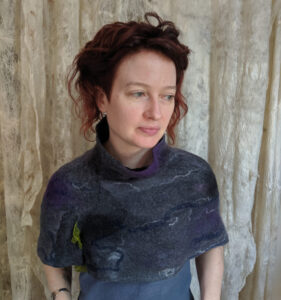
Katherine Bennett (LadyK)
As a new media, fiber, and installation artist, LadyK’s practice encompasses interactive and responsive systems exploring how our collective digital experiences are shaping our future. She merges ancient fiber traditions with programming and physical computing to create nervous systems for her handcrafted soft fiber structures. Liminal spaces brought forth by digital technologies fascinate her, as LadyK explores the cultural transformations that result. Her latest environments investigate how communication technologies are shaping our identity, pushing a tighter integration with the machine.
Associated project: Luciferins
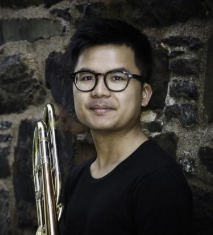
Kalun Leung
Kalun Leung is a trombonist, improvisor, composer and creative technologist based in Brooklyn, New York. His work as an instrumentalist is motivated by the exploration of new and unexpected contexts in which the trombone can thrive. This ongoing research-based approach has manifested in audiovisual performances of Keith Haring’s unpublished computer art and a Fluxusinspired trombone sound sculpture. He is a member of the movement and sound improvisation collective ECHOensemble, Eco-Music Big Band, and has a solo project involving electroacoustic improvisation.
Associated project: Die Posaune

Željka Blakšic
Željka Blakšic AKA Gita Blak born in Zagreb, Croatia (ex- Yugoslavia) is a multidisciplinary artist who lives and works in New York City. Her inspiration often stems from the sub-culture of the 1990s-era in Croatia, when punk, anarcho and eco movements were having a renewal. Her artistic career began in early adolescence in the field of music and performance. The current work reflects long-term collaborations with different subculture groups, collectives or choirs often placed in non- traditional architectural spaces. She works across multiple disciplines; the constants in her practice are performance, 16mm film, video and installation.
Associated project: START Magazine Archive Project
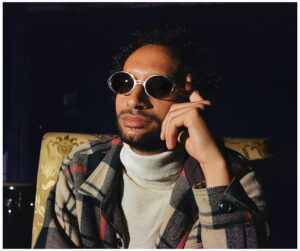
Zeelie Brown
Zeelie Brown is an interdisciplinary artist whose spiritual work conjures together Afro-Atlantic religious cultures to form Soulscapes–black, transfeminine, utopic, technopolitical sanctuaries. By utilizing sound, textiles, and installation, her practice manifests revolutionary beauty to offer spaces of anti-patriarchal gentleness, light, and warmth. Zeelie has performed at RISD, Flux Factory, Elsewhere, Recess Gallery, Project Row Houses and Harvard University, and has been featured in Art in America and the Village Voice.
Associated project: Immersive Light and Sound Installation
Zeelie Brown will be developing an immersive light and sound installation that explores the archive of Audre Lorde, examining the crossroads of environmental peril, digitally inspired social change, and a politics of fear. This environment will represent both sanctuary and wilderness, acting as a refuge amidst social and political flames. Within the installation will be a performance that interrogates predetermination, with some features scored and others relying on the audience.
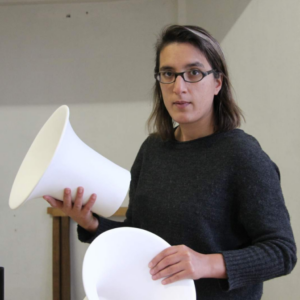
Zahra Poonawala
Zahra Poonawala was born in Geneva, Switzerland in 1983. She lives in New York and studied art in France with a degree from Haute Ecole des Arts du Rhin (Hear, Strasbourg) followed by New Media at the Fresnoy, Contemporary Art Studio. She collaborates regularly with composers, programmers, constructors and interprets.
Associated project: Manifesto from Lorraine
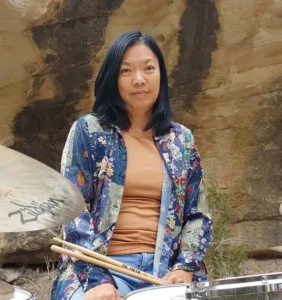
Susie Ibarra
Susie Ibarra is a composer, percussionist and sound artist based in New Paltz, New York. She is a Yamaha, Paiste and Vic Firth Drum Artist. Ibarra is a 2018 Asian Cultural Council Fellow in support of her project, Himalayan Glacier Soundscapes, An Acoustic Story on Climate Change. She is mapping and researching sound data from source to sink along the Himalayas into the Ganges with glaciologist and geomorphologist Michele Koppes.
Associated project: An Acoustic Story on Climate Change: Himalayan Glacier Soundscapes

Sarada Rauch
Sarada Rauch is an artist, poet and musician born in Los Angeles and based in Brooklyn. Rauch’s work reenacts popular media and intimate memory, collapsing them into each other to explore the construction of histories and unbelonging. She works primarily in digital and new media with a practice that includes sculpture, writing, and performance.
Associated project: This is What it Feels Like in the End
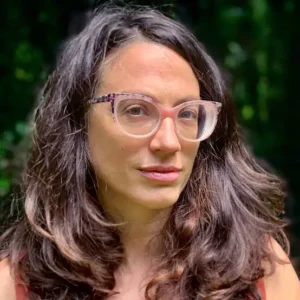
Sabine Gruffat
Sabine Gruffat is an artist who works with experimental video and animation, media-enhanced performance, participatory public art, and immersive installation. By actively disrupting both current and outmoded technology, she questions standardized ways of understanding the world around us. She is also a filmmaker with a special interest in the social and political implications of media and technology, creating films that seek to empower people, encourage social participation, and inspire political engagement. Currently she is Associate Professor of Art at the University of North Carolina – Chapel Hill and a co-founder of the Cosmic Rays Film Festival.
Associated project: AntiBodies
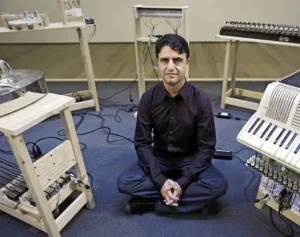
Ranjit Bhatnagar
Ranjit Bhatnagar works in music, installation, and text, with a particular interest in algorithmic techniques and in improvisation at all stages of creation. His works have been exhibited across the United States and in Europe. He has performed recently with Lea Bertucci, Qubit and Margaret Leng Tan, and recently published a book of algorithmic poetry, “Encomials: Sonnets from Pentametron”.
Associated project: Force Feedback
Pure Rave
Pure Rave, a collective based in Detroit, Michigan, is an ongoing experiment in “chance dance”. Set amidst the context of contemporary Detroit electronic music, rhythmic sonic collage is created from various prepared turntables, “damaged” records, drums machines, and 133.33 bpm loops. At Harvestworks they will take their self-proclaimed “old-world indeterminate” production style to another level and create a program that bridges experimental DJ performance style and electronic music composition.
Core members Nick George and Bryan Dulaney expand on techniques developed by experimentalists Christian Marclay, Pierre Schaeffer, Otomo Yoshihide, Maria Chavez, Qbert, and Graham Dunning, approaching the Pure Rave project as a set of rules and limitations for an inaccessible academic experimental music scene and vapid modern DJ culture.
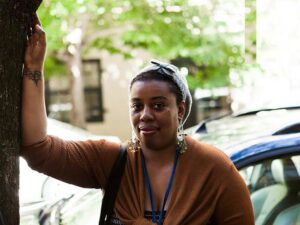
Nicole Goodwin
Nicole Goodwin is the author of Warcries, as well as the 2018-2019 Franklin Furnace Fund Recipient, the 2018 Ragdale Alice Judson Hayes Fellowship Recipient, 2017 EMERGENYC Hemispheric Institute Fellow as well as the 2013- 2014 Queer Art Mentorship Queer Art Literary Fellow. She published the articles “Talking with My Daughter…” and “Why is this Happening in Your Life…” in the New York Times’ parenting blog Motherlode. Additionally, her work ‘”Desert Flowers” was shortlisted and selected for performance by the Women’s Playwriting International Conference in Cape Town, South Africa.
Associated project: Ain’t I a Woman (?/!): Poems
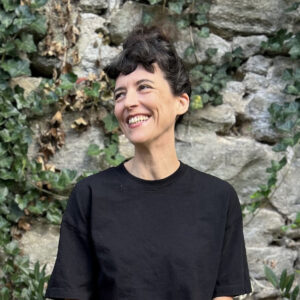
Natacha Diels
Natacha Diels’ work combines choreographed movement, improvisation, video, instrumental practice and cynical play to create worlds of curiosity and unease.
Associated project: I Love Myself Fully and Unconditionally
Natacha Diels, in partnership with MATA, New York’s most dcomopolitan new music presenter, will produce I Love Myself Fully and Unconditionally, a site specific installation/tour for the New York Electronic Art Festival on Governors Island. A collaboration between composers Natacha Diels and Sam Scranton, is equal parts ‘installation’ and ‘Individual Guided Tour’.

Mollye Bendell
Mollye Bendell makes digital and analog sculptures for digital and analog worlds. Her practice explores the dissolving line between the digital and the physical that defines the human/user experience of “things.” In her work, she experiments with virtual reality, 3D printing, laser cutting, CNC machining, circuit building and bending, and codeable objects. The intangible nature of electronic media is used as a metaphor for exploring vulnerability, visibility, and longing in a world that can feel isolating. Mollye currently lives and works in Baltimore, Maryland.
Associated project: The Language of the Angels

Matthew Ortega
Matthew Ortega is an artist, designer and musician working at the intersection of art and technology. Beyond the use of traditional media such as cut and torn paper, he also worked with video and sound by using archival film and youtube clips to create fictional narratives. After a brief hiatus working as a digital designer, he acquired the skills to start creating custom software to further expand his artistic expression. Though he still works with ideas of refuse, decay, and distortion that come from remix culture, he also began to explore what technology can offer to one’s art practice.
Associated project: Improbable, Inevitable
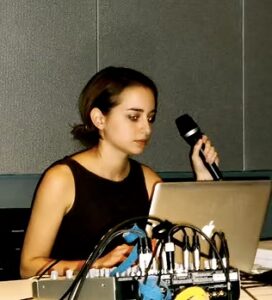
Jenn Grossman
Jenn Grossman is a sound/experiential media artist/composer concerned with the psycho-spatial possibilities of ephemeral media, exploring displaced realities, staged synchronicity, cyclical time, memory, disembodiment, and perceptual affect as components of composition. Her work has taken the form of modular sound sculptures/installations, multichannel sound works, light/projection events, ambient soundscapes, video projection installations, and public interventions.
Associated project: Lumen
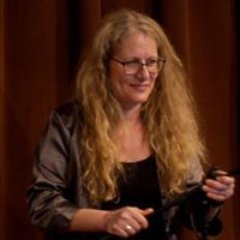
Dafna Naphtali
Dafna Naphtali is an electronic-musician and vocalist who composes and performs experimental and interactive electroacoustic music, creating projects over the past 20+ years with live sound-processing of voice and other instruments, multi-channel audio, and musical robots. These performative “instruments” are all built on her programming in Max/MSP. Dafna also creates audio augmented-reality soundwalk compositions/apps for the U-GRUVE AR platform. All her projects draw on her eclectic musical background in jazz, classical, rock and near-eastern music.