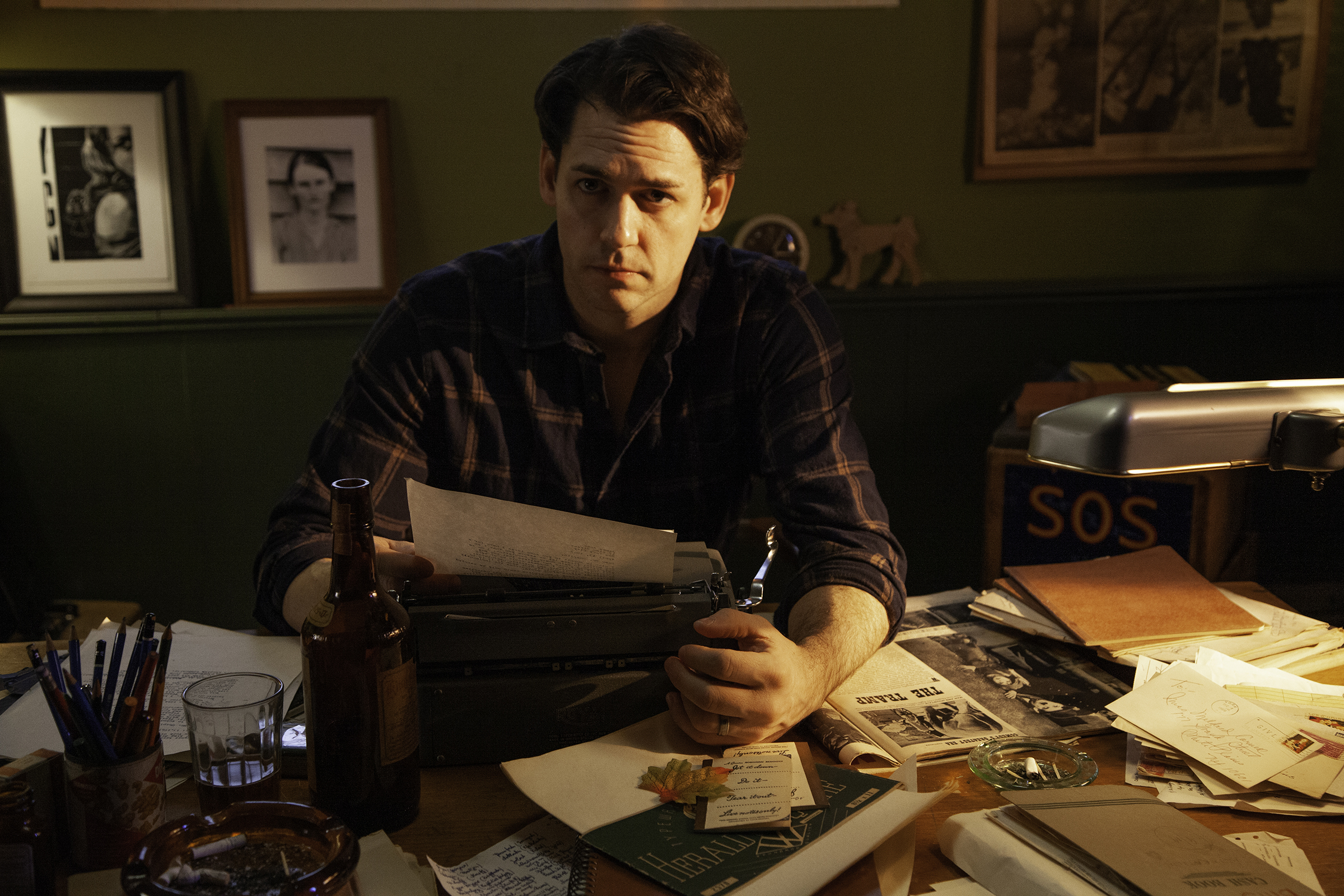
A feature length film currently in post production (2019), inspired by a film scenario that James Agee wrote for Charlie Chaplin in 1948. Although Agee’s film was never realized it is a fascinating thought experimental about how a utopian community could form in the ruins of New York. This essay film will explore what this could mean for us today.
Funding for The Tramps New World comes from the New York State Council on the Arts with the support of Governor Andrew M. Cuomo and the New York State Legislature.
“A Tramp’s New World” is the third part in a trilogy of films that explore unrealized scenarios by radical artists. These works are neither documentaries of failed films nor pastiches of period movies rather I use the original notes as a starting point to create a dialog with the past to help us gain new perspectives on our world today.
In a scenario written for Chaplin, James Agee imagined New York City destroyed by a nuclear bomb. At first there appears only one survivor, the little Tramp. The Tramp discovers an abandoned baby and then a young woman. He builds a shack for his newfound family in Central Park. Gradually a little multi-cultural collective takes shape. But it does not last. Representatives from the big corporations reappear to lure the people into a new commodity culture of smart objects and the Tramp finds himself alone again. Though his community is destroyed his spirit remains unbowed. As the Little Tramp sets off across the ruins of our country he remains as ever mischievous, anarchic, eternally optimistic.