2024 Artists in Residence
Awarded Artists:

Pat Badani
Pat Badani is an artist, writer, and scholar born in Argentina. Throughout her densely woven research-creation journey she has drawn from the fields of art, science, and technology to develop projects that inspect social, biological, and technological networks. Projects have been recently shown in curated, international new media events: Festival de la Imagen (Colombia); ELO – Electronic Literature Organization (Canada); and Technoetic Arts, DeTAO (China). Profiled in LEONARDO Journal; Afterimage: The Journal of Media Arts and Cultural Criticism; and Artelogie Journal (EHESS, France); her works have been discussed in anthologies such as The Performing Observer: Writings on Contemporary Art, Performance, and Photography, ed. Martin Patrick (Intellect Press, Bristol, UK) and Advances in Visual Methodology, ed. Sara Pink (Sage publications, London). In 2024, Badani received a major award from The Canada Council for the Arts to develop “BichEden: ParaDoxa”.
Pat Badani’s projects have been distinguished with over 20 awards and commissions by the Canada Council for the Arts; Illinois Arts Council; DCASE; National Endowment for the Arts; the Robert Heinecken Trust; Harvestworks; Festival Internacional de la Imagen; Art Souterrain; and recognized for leading-edge work by Creative Capital, Art Matters, and AWAW, in the U.S.A. Badani exhibits her projects broadly in North and South America, Europe, and Asia, in electronic media festivals, galleries, and museums. She has participated in international symposia with her essays and talks in over 15 countries, and her works have been critically surveyed in conference panel discussions, in scholarly journals, and in art history anthologies. She is former full-time faculty at ILSTU (Integrated Media); Acting Director at Colombia College, Chicago (Interdisciplinary Arts); and Editor-in-Chief of Media-N Journal, New Media Caucus, in the U.S.A. Since 2017 she serves on the board of directors of ISEA International overseeing the continuation of the annual symposia. (https://www.patbadani.net/)

Associated project: BichEden : Para Doxa
Emmett Palaima
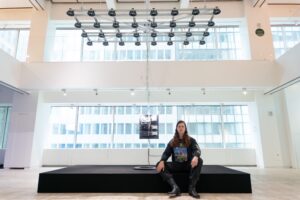
Emmett Palaima is an artist working with electronics and esoteric processes of sound creation. His work is conceptually rooted in the idea that technology and magic are one and the same, and that electricity is a manifestation of the divine or elemental forces underlying physical reality. He creates instruments which explore the experience of sound as an embodied, physical process and the sculptural beauty of the systems used in sound creation.
His practice approaches music history through a materialist lens: that the technological tools used to make music drive its stylistic development, and that by building new platforms for sonic experience, it is possible to advance the music-historical process. A key feature of this approach is collaboration, making the instruments he creates accessible to other performers thereby sharing and more fully exploring their sonic and creative potential. This approach centers on a long-term body of work building towards the creation of TEMPLE-65536: the world’s largest spatial audio instrument as a permanent installation open to artists and composers from around the world.
He has been an artist-in-residence at Harvestworks and a recipient of a NYSCA Support for Artists Grant. In 2024, he opened Chambers Hum, a public sound artwork developed in collaboration with the NYC MTA, active seven days a week on the Chambers St A/C subway platform. His work has been exhibited internationally, including at the Currents New Media Festival and Fusebox Festival. He has worked as a Sound Technologist for immersive installations with Meow Wolf Creative Studios and Dadalab, and contributed to projects for the Whitney Biennial, the Palm Springs Art Museum, and the CalArts MTIID Program. He has toured as a guitarist with Elizabeth Colour Wheel and played electronic ensemble sets at Moogfest and MASS MoCA. He has also worked professionally as a designer of guitar pedals and synthesizers. His practice is a consolidation of these diverse influences, combiningelements of functional and aesthetic design, sound, performance and architectural space. He lives in New York City.

Bill Fontana
In a career spanning 55 years, Bill Fontana has become internationally recognized for his pioneering experiments in sound. Since the late 1960’s, he has consistently used sound as a sculptural medium to interact with and transform our perceptions of visual and architectural spaces. Applying his knowledge of composition, he draws out patterns of sound from natural and manmade worlds to create sound works that have the potential to conjure up visual imagery in the mind of the listener. He has realized sound sculptures and radio projects for institutions, museums and broadcast organizations around the world.
Many of these works create live listening networks that collect information from sources as diverse as the slowly vanishing sounds of Japan, the Bosporus River in Istanbul and it’s cisterns, the Large Hadron Collider at CERN, the Millennium Bridge in London, the sounds of the sea of Normandy Coast, fog horns in San Francisco, old growth forests, hydroelectric turbines, diverse urban and marine environments; the silenced bells of both Notre Dame and the Great Bell of the Vatican; the imagined sounds of the Anhalter Bahnhof in Berlin, the deserts of the Arabian Peninsula, rain forrests from 3 continents and the melting Dachstein Glacier in the Austrian Alps. Fontana’s projects have explored hybrid listening technologies using acoustic microphones, underwater sensors (hydrophones) and structural/material sensors (accelerometers). His more recent works are explorations of the relationship between image and sound, expressed through the combined mediums of audio and video.
Many of these works create live listening networks that collect information from sources as diverse as the slowly vanishing sounds of Japan, the Bosporus River in Istanbul and it’s cisterns, the Large Hadron Collider at CERN, the Millennium Bridge in London, the sounds of the sea of Normandy Coast, fog horns in San Francisco, old growth forests, hydroelectric turbines, diverse urban and marine environments; the silenced bells of both Notre Dame and the Great Bell of the Vatican; the imagined sounds of the Anhalter Bahnhof in Berlin, the deserts of the Arabian Peninsula, rain forrests from 3 continents and the melting Dachstein Glacier in the Austrian Alps. Fontana’s projects have explored hybrid listening technologies using acoustic microphones, underwater sensors (hydrophones) and structural/material sensors (accelerometers). His more recent works are explorations of the relationship between image and sound, expressed through the combined mediums of audio and video.
Associated project: Silent Echoes: Castle Williams
Composer and media artist Bill Fontana will present Silent Echoes: Castle Williams – a site specific, multi-channel sound installation at Castle Williams on Governors Island. This installation will be a continuation of the ongoing Silent Echoes project, which employs a network of vibration sensors that collect and transmit harmonic echoes within the silenced bells of the Notre Dame cathedral amidst its repair. Silent Echoes has previously been transmitted to IRCAM in France and to the ice caves of Dachstein, duetting with the sounds of the melting glacier.
Jillian McDonald
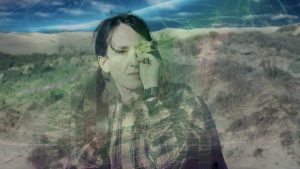
Jillian McDonald is a dual citizen Canadian-American artist living in Brooklyn and Troy, NY. She received an MFA in Combined Media from Hunter College at City University of New York and is a professor at Pace University.
Exhibitions and screenings were held at PS122 Gallery, Undercurrent, Air Circulation, and FiveMyles in New York; The Art Gallery of Regina in Saskatchewan; Régart, La Bande Vidéo, and AxeNéo7 in Québec; aCinema in Milwaukee; Philip Steele Gallery in Denver; and The Esker Foundation in Calgary. She has mounted performances for 50 to 1000 performers in natural and urban settings in Tempe at The Arizona State University Art Museum, in Sweden in collaboration with Lilith Performance Studio, and in Toronto at La Nuit Blanche. A CBC IDEAS documentary profiles her videos, which were also reviewed in The New York Times and Canadian Art. Critical discussion appears in The Transatlantic Zombie by Sarah Lauro and Deconstructing Brad Pitt, edited by Christopher Schaberg. Awards include grants from The New York Foundation for the Arts and The Canada Council for the Arts, and participation in numerous international residencies such as Wave Farm in Acra, NY, The Arctic Circle Artist & Scientist Residency in Svalbard, Norway, The Headlands Center for the Arts in California, Sporobole in Sherbrooke, Québec, the Glenfiddich Canadian Art Prize in Dufftown, Scotland, and The Banff Center for the Arts in Alberta, Canada.

Associated project: Total Eclipse and the Heart
Zeena Parkins
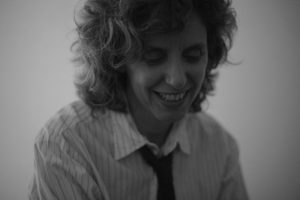
New York based electro-acoustic composer / improviser Zeena Parkins is a pioneer of contemporary harp practices. Using expanded techniques, object preparations, and electronic processing she has re-defined the instrument’s capacities. Concurrently, Parkins self-designed a series of one-of-a kind electric instruments. She leans into the harp’s physical limitations pushing its boundaries and impossibilities. In her compositions, Parkins utilizes collections, recombination, historic proximities, geography, tactility, spatial configurations and movement. Sonic presence and personality is revealed in explorations of subtle frequency shifts, feedback, over and under tones, melodic fragments, timbral and gestural intervals, perception, and residues.
Associated project: Machine-learning-based Instrument
Electro-acoustic composer, improviser, and harpist Zeena Parkins will be creating a machine-learning-based instrument to create sonic discourse between the acoustic harp and a computer, with the computer listening and responding to the performer’s sounds in real-time and acting as a collaborative partner. Zeena will be working in collaboration with multimedia artist and composer Matthew Ostrowski, who will be the DICY2 programmer of this instrument. Zeena will also record a new piece using her developed instrument, which will be mixed and mastered by sound artist and engineer Paul Geluso.
Senem Pirler & Monica Duncan
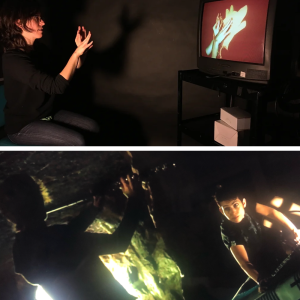
Monica Duncan and Senem Pirler have been collaborating since 2017, creating audiovisual performances that investigate everyday objects, concepts of agency and queer potentiality. Their collaborative work has been shown in numerous festivals and venues such as Revolutions Per Minute, Kuala Lumpur Experimental Film, Video & Music, Transient Visions, Light Matter, Athens International Film + Video, Re-connect Art Festival as part of the Prague Biennale, Intermediale Festival of Audiovisual Forms, Chicago Underground Film Festival, Festival ECRÃ, Fisura, International Festival of Experimental Film & Video and forthcoming CURRENTS New Media Festival. Duncan and Pirler performed their audiovisual performance, “Surface Connection” at the 61st Ann Arbor Film Festival’s Expanded Cinema program and exhibited their work in the LEAF2023 Sync Exhibition. They have been artists-in-residence at Signal Culture (Owego, NY), PACT Zollverein (Essen, Germany), Institute for Electronic Arts (Alfred, NY) and LMCC at Governors Island (NYC). They are recipients of the 2024 Harvestworks New Works Artist Residency.

Associated project: Plasticity: Tears for Lost Frequencies
Ellen Pearlman
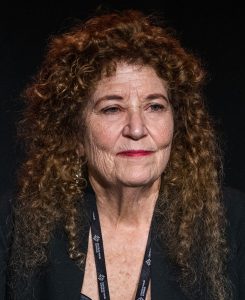
Ellen Pearlman is a New York based media artist, curator, writer and educator. An Affiliate Research Professor at the New York University Tandon School of Engineering @ the Brooklyn Navy Yard, she was awarded a three-year grant as a guest artist by German Culture Foundation for a collaboration with Musiktheater im Revier Gelsenkirchen (MiR.LAB) under the direction of Nora Krahl to work on a new AI opera, “The System Cannot Fail”. She is also a member of the London-based Alan Turing Institute’s AI and Art working group, as well as a participant in the MIT Co-Creation Lab partnership with the human rights organization Witness on Documentary AI.
Ellen was previously an artist resident at both Mir Lab and Dock 11 in Germany. A New Works Artist Grantee at Harvestworks in New York City she has been a presenter at Ars Electronica Expanded Animation festival in Linz, Austria, a Lumen Prize finalist in AI Moving Images, a Research Fellow at MIT, A Fulbright Scholar to the Department of Mathematics and Informatics at The University of Warsaw, Poland, a three-time Fulbright World Learning Specialist in Art, New Media and Technology, an EU Vertigo STARTS Laureate (Horizon 2020), a Zero1 American Arts Incubator/U.S. State Department cultural envoy to Kyiv, Ukraine, and a Fulbright Alumni Ties grantee. A Senior Research Associate Professor at RISEBA University in Riga, Latvia she was a Contributing Editor to Performance Arts Journal (PAJ) MIT Press. She received her Ph.D. in Digital Media from the School of Creative Media at Hong Kong City University where two out of three years she was awarded the department’s outstanding academic achievement award. She premiered her brain opera “Noor”, the world’s first immersive interactive brainwave opera in a 360 degree theater at ISEA Hong Kong and Microwave International Festival, HK. Her PhD thesis, “Is There A Place In Human Consciousness Where Surveillance Cannot Go?” was awarded the highest global ranking from Leonardo LABS abstracts.
Associated project: LILM, an AI Cinematic Opera Of The Skin
To create LILM, an AI Cinematic Opera Of The Skin, Ellen Pearlman will use the Stable Diffusion AI model to render cinematic representations of generational trauma, with a soundscape powered by EMG patches sensing the movement of human facial muscles. Ellen employs Large Language Models (LLMs) in her work to explore the effect that traumatic memory has on inherited rDNA structures in diasporic populations. Through this process, Ellen also highlights the ways in which AI can distort and meld epigenetic memory. Part One of LILM was completed in Warsaw, Poland.

Amina Ross
Their artistic endeavors exist within a dynamic intersection of video art and sculpture, serving as a platform to explore themes of feeling, embodied knowledge, and intimacy as vital survival technologies, particularly for Black, queer, trans, and feminine-spectrum individuals. In the realm of video art and sculpture, Ross’s work transcends conventional storytelling, they harness the evocative power of words and imagery to conjure deep-seated emotions and sensations. At the heart of Ross’s creative inquiry lies an exploration of how systems of power shape our perception of reality.
Ross’s work has been exhibited internationally, including at MoMA PS1, the Hessel Museum of Art, the Museum of Contemporary Art Chicago, and Tate London. They are a dedicated educator currently teaching at Parsons School of Design, with prior appointments at Rhode Island School of Design, Vassar College, the School of the Art Institute of Chicago, and the School for Poetic Computation. Ross holds a BFA from SAIC and an MFA from Yale School of Art, where they received the Fannie B. Pardee Prize in Sculpture.
Ross lives and works in Brooklyn, New York.
Associated project: Agents of Perpetual Discontent
In Amina Ross’ agents of perpetual discontent, motion-captured avatars will gradually deconstruct the room surrounding them. Structural deconstruction is an ongoing theme in Amina’s work, with rooms and structures often representing emotional and societal conditions. In this piece, the “rooms” will be sites of architectural significance, specifically to feminist and queer-of-color historical timelines. This series of live simulations will be an extension upon Amina’s video works, carcass/under glass (2023) and man’s country (2021).
Alice Shields
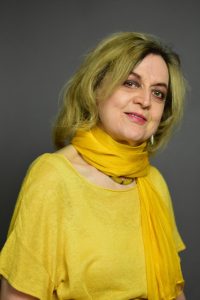
Alice Shields spins stories rich with the cultures of the world. Her operas and other music for voice, instruments and media morph together Western and non-Western forms of classical music and theater, such as the Noh Theater of Japan and the Bharata Natyam dance-drama of India. The result is Shields’ intense body of work: highly sculptured sound and singing with impassioned, complex movement and powerful drama.
Shields holds a doctorate in music composition from Columbia University, has taught psychology of music at NYU and has been Associate Director of the Columbia-Princeton Electronic Music Center and Director of Development of the Columbia University Computer Music Center. One of the pioneers of electronic music, she is also unique as a composer in having become a professional opera singer, singing traditional and modern roles with the New York City Opera, Washington National Opera, the Clarion Music Society and other companies. Her expertise as a composer and librettist is highly informed by her training and onstage experience as a singer.
Her music has been performed by the Akademie der Künste in Berlin, Venice Biennale, New York City Opera’s Vox festival, New York City Electroacoustic Music Festival, Columbia- Princeton Electronic Music Center, American Chamber Opera Company, Composers Chamber Theater, Santa Fe Opera Gallery Concerts, American Virtuosi Opera Theater, Lake George Opera Festival, Dance Alloy, Frostburg State University Dept. of Theater and Dance, James Madison University Dept. of Music and Dance, Arangham Dance Theater (India), Azure Ensemble, American Composers Alliance and the Association for the Promotion of New Music.
Shields has received grants and awards from Chamber Music America, Meet the Composer, NEA, NYFA, the National Opera Institute, Mary Flagler Cary Trust and other institutions. Her music is recorded on New World Records, CRI, American Composers Alliance, Albany Records, Koch International Classics, Opus One and Tellus. Her work is published by the American Composers Alliance.

Lucie Vítková
Lucie Vítková/ Luc Vitk is a composer, improviser, and performer (accordion, hichiriki, drums, synthesizer, harmonica, voice, and dance) from the Czech Republic and New York. They received their PhD from the Janáček Academy of Music and Performing Arts in Brno (CZ) and conducted research at the Royal Conservatory in The Hague (NL), the California Institute of the Arts in Valencia (USA), the Universität der Künste in Berlin (D), Columbia University in New York (USA), and New York University. They are currently a Lecturer at the School of Music, Waipapa Taumata Rau, Aotearoa / University of Auckland, New Zealand.
Their compositions focus on sonification (compositions based on abstract models derived from physical objects), while in their improvisation practice, Luc works with the characteristics of discrete spaces through the interaction between sound and movement. In Luc’s recent work, they are interested in the social-political aspects of music in relation to everyday life and in reusing trash to build sonic costumes and instruments.
They have been nominated for the 2017 Herb Alpert Awards in Arts in the category of Music, were commissioned by the Roulette Intermedium New York in 2017 and 2023, and have become Roulette resident artist in 2018. They have put together two ensembles: the NYC Constellation Ensemble (focused on musical behavior) and the OPERA Ensemble (for singing instrumentalists)

Associated project: Water Vision
Adrienne Westwood & Angelica Negrón
Adrienne Westwood’s multi-layered work incorporates objects into embodied explorations of memory, bringing traces of other times and places into the present. Her work has been called “a finely crafted progression” (The Philadelphia Inquirer) and noted for its “precision, attention to detail and unspecific but tangible sense of the barely remembered” (Culturebot).
Puerto Rican-born composer and multi-instrumentalist Angélica Negrón writes music for accordions, robotic instruments, toys, and electronics. Her music has been described as “wistfully idiosyncratic and contemplative” (WQXR/Q2) while The New York Times noted her “capacity to surprise.”
Associated project: []
Featuring choreography by Adrienne Westwood and electroacoustic composition from Angélica Negrón, [ ] is a performance and interactive installation, focused on telling the untold histories of femme ancestors. [ ] is centered around a sonic sculpture from which golden metal objects (“memories”) are suspended. The artists envision the sculpture as a portal into history.

Katherine Young
Katherine Young’s electroacoustic music and sonic art has been recognized by awards, fellowships, and commissions from organizations including the Guggenheim Foundation, Fromm Foundation, and the Internationales Musikinstitut Darmstadt. As a bassoonist and improviser, Katherine amplifies her instrument and employs a flexible electronics setup. Katherine lives in Atlanta, where she teaches composition, improvisation, and electronic music at Emory University.
Associated project: Mycorrhiza VI
Mycorrhiza VI will be the sixth installment of Katherine Young’s Mycorrhizae series. This piece has been commissioned by the NYC-based violin, horn, and piano trio Kylwyria as an interactive multichannel work incorporating live processing, predetermined sonic material, and improvisation. Mycorrhiza VI will be the first piece in the series to divert from a solo performance structure. The series derives its name from the underground fungal networks that work with the root systems of trees and other plants to symbiotically share nutrients, a process from which Katherine draws inspiration in her compositional process.
Katherine Liberovskaya
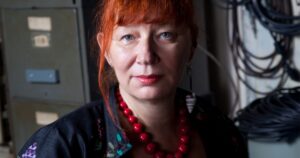
Katherine Liberovskaya is an inter-media artist based in New York City and Montreal, Canada. Involved in experimental video since the 80s, she has produced many single-channel videos, video installation works and video and music performances which have been presented at a wide variety of events and venues around the world.
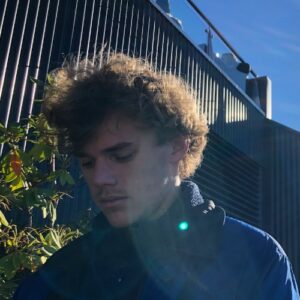
Tom Bloxam
Tom Bloxam is a sound artist based in Brooklyn, NY. His work, which includes spatial audio practices, found-sound collages, and vinyl DJing, explores the nature of the relationship between sound and environment. He will be developing an immersive, stimulus-based sound installation.
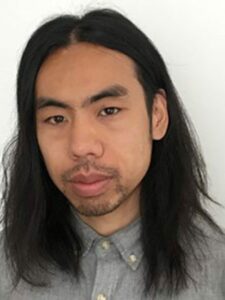
Casey Tang
Casy Tang is an artist and researcher whose work explores the intersections of ecology, narrative, and sound. Casey will be developing his project To Carry the Earth, which sonifies the possibilities of embracing a geocentric worldview, instead of the typical Western egocentric frame of reference. Casey’s work has been shown internationally in China, Japan, Germany, and across the US.
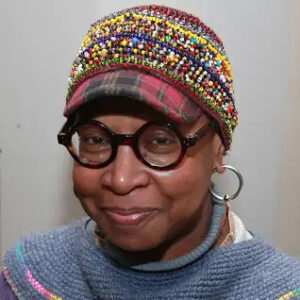
Xenobia Bailey
Xenobia Bailey is an artist, designer and activist based between Philadelphia, PA and New York, NY. Her crochet work has appeared in Elle Magazine, Do the Right Thing (1989), among other places. She is now experimenting with digital photo narratives and video work. Xenobia is developing a body of work includes historical research at the Historical Society of Pennsylvania on The Free Blacks Community in 1700s Philadelphia, and at the Schomburg Center for Research in Black Culture in New York.
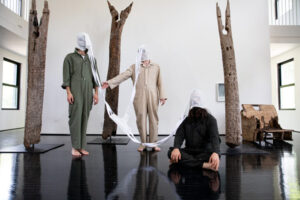
The Daxophone Consort
The Daxophone Consort is Daniel Fishkin, Cleek Schrey, and Ron Shalom. The daxophone is a thin wooden strip played with a bow, which was created by the German improviser/inventor Hans Reichel in 1987. The instrument’s sound, somewhere between a cello and badger, ranges from furtive gurgles and delicate whistles to wild screams. The Consort has been active since 2015. They develop realizations of historical experimental music and baroque motets, commission new daxophone pieces from living composers, and generate new pieces based on shared improvisational grammar. At Harvestworks, The Consort will reimagine, record, and perform composer John Cage’s 1979 choral work, Hymns & Variations.